
Permaculture
Design Practicum
Forest Gardens, in collaboration with Sylva Culture Commons, hosts the 5th annual Permaculture Design Certificate course on Salt Spring Island — this year combined with the design and creation of a Food Forest.
Learn
Every Friday from August 14th to October 30th, 2026, join us on the slopes of Mt. Tuam for a full Permaculture Design Certificate taught across twelve days on the land.
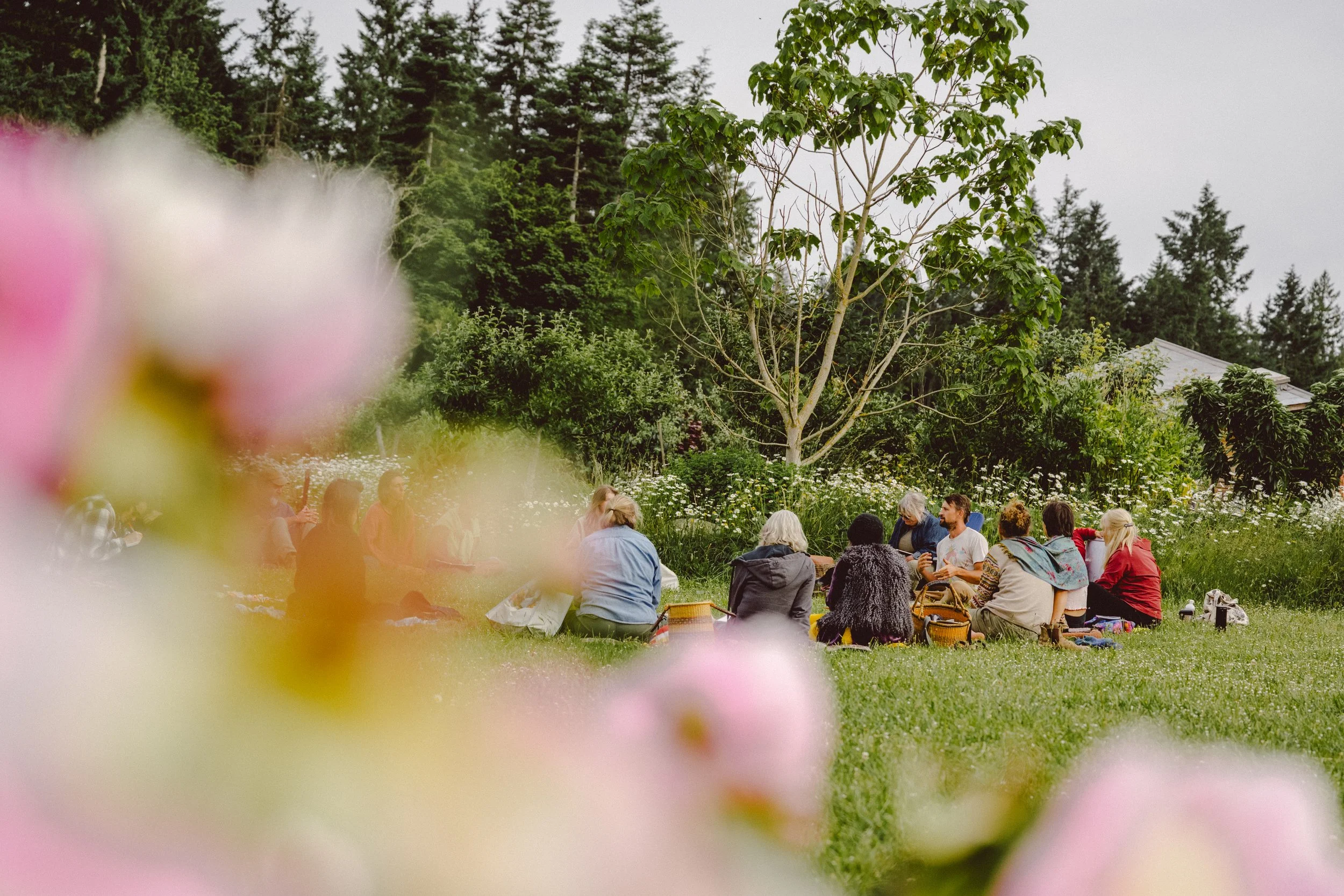
Mornings are theory: ethics, principles, patterns, reading a landscape, and the design methods that hold it all together. Afternoons are practice. Over the twelve weeks we will design and create a food forest together, from bare ground through observation, mapping and planting — so the theory of the morning is embodied by the afternoon.
What ~ 84 hours of in-person learning to earn an internationally recognized Permaculture Design Certificate
When ~ Twelve Fridays, August 14th to October 30th, 2026, 9 am to 5 pm
Where ~ Forest Gardens, Mt Tuam, Salt Spring Island, BC
Investment ~ Pay what you want
Drop in ~ Single classes welcome — come for the skills without the certificate
Scholarships ~ Available for BIPOC
Designing and creating a food forest, from bare ground to planting
Water harvesting and stewardship
Natural building and ecological infrastructure
Renewable energy and off-grid living
Soil regeneration and ecosystem restoration
Community design and resilient local economies
Practical homesteading skills for everyday life
Course Topics
Course Details
Based on observation and emulation of natural patterns and ecological systems, Permaculture Design integrates the physical, temporal and social elements of life into a synergistic relationship between humans and the ecosystem.
By consciously designing human settlements to have the diversity, stability and resilience of natural ecosystems, Permaculture Design offers us the tools to live a healthy life that supports future generations and the planet.
What is Permaculture Design?

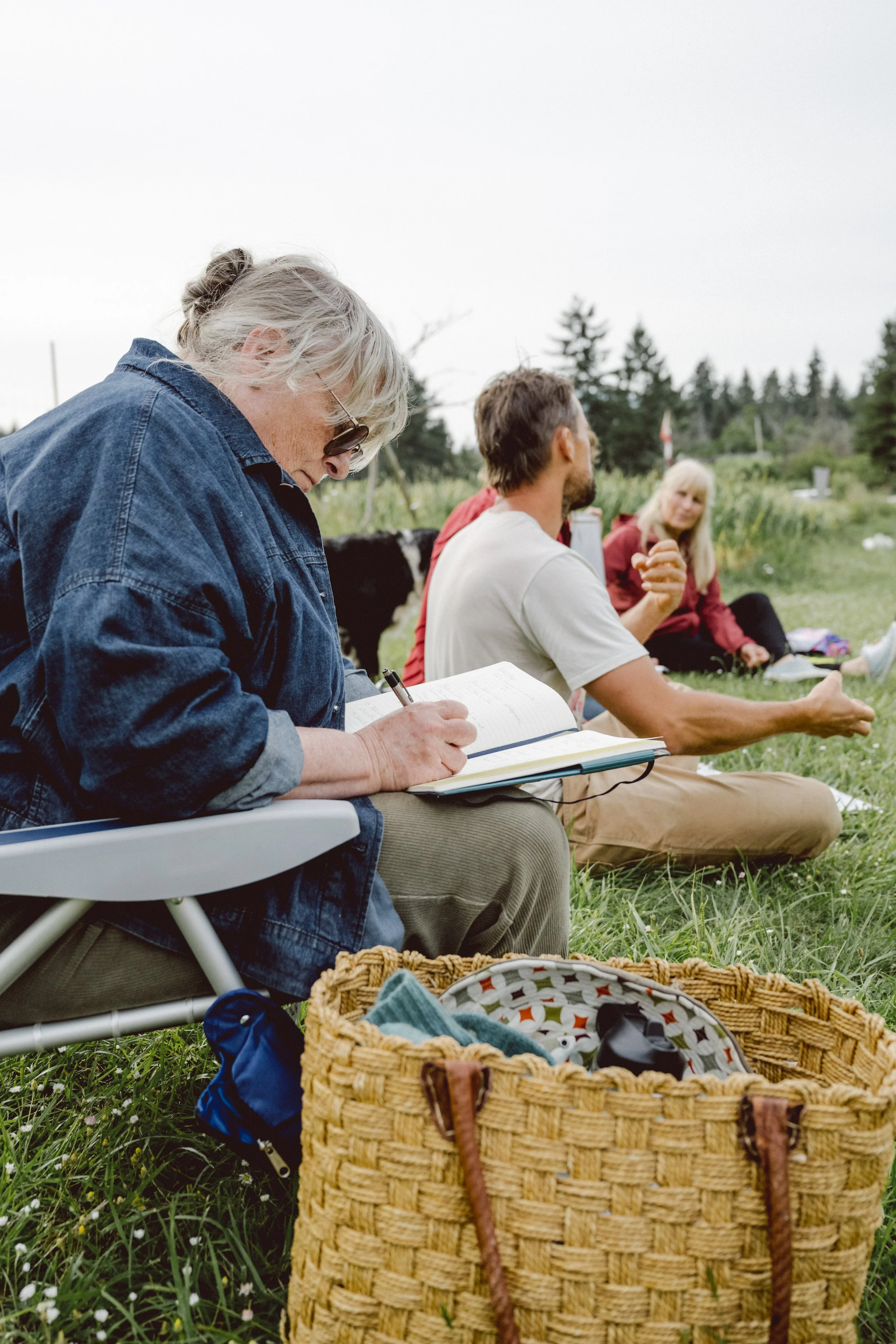
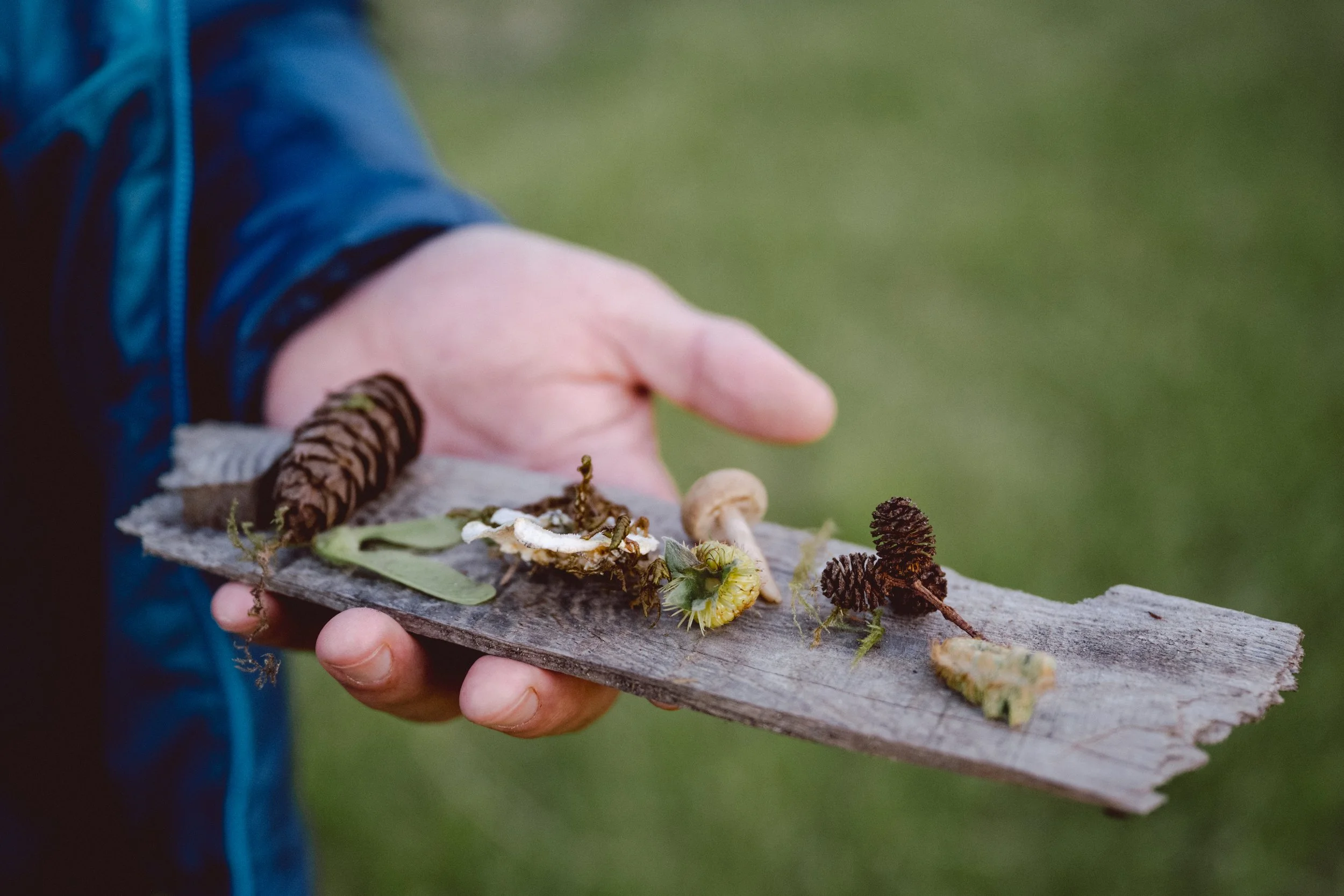
Do you long for a lifestyle that feels more grounded, meaningful, resilient, and connected?
Do you want practical tools for living closer to the land, but feel overwhelmed by where to begin?
Are you curious about off-grid living, food sovereignty, ecological design, and systems that truly support life?
Do you want to learn alongside others who care deeply about regeneration, community, and Earth’s future?
Have you wanted to take a PDC but couldn't step away from work or family for two weeks straight?
If you are nodding yes, then come join us in the forest.
We invite you to join us to explore Permaculture Design — a global movement dedicated to creating thriving human habitats in harmony with nature.
Is this for you?
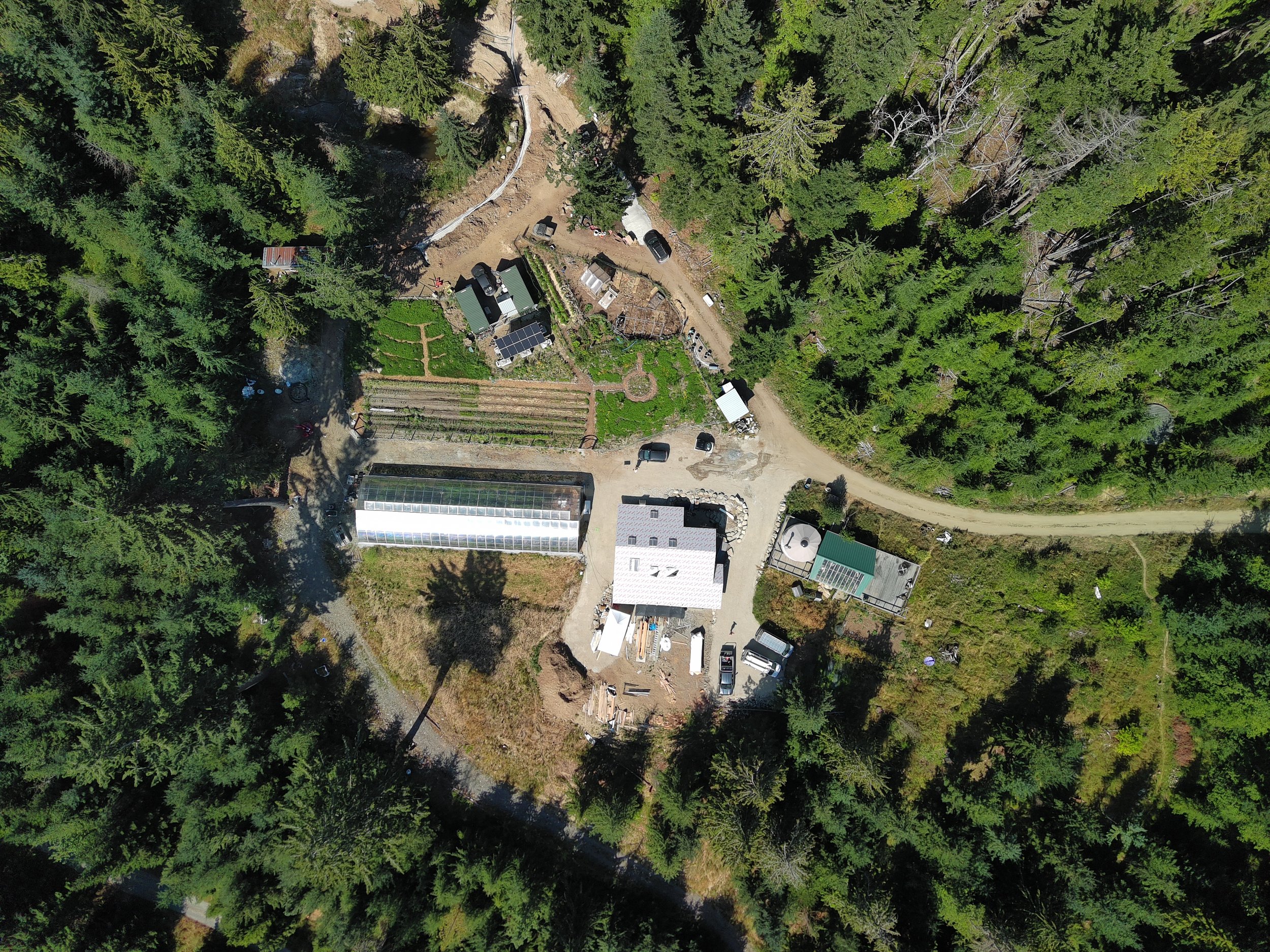
A practical understanding of Permaculture ethics, design principles, and techniques.
The ability to read a landscape and recognize the patterns, processes, and systems that make up the natural world.
Tools for integrating human systems harmoniously with the natural world.
A deeper sense of connection to nature and your place within it.
The confidence and motivation to create positive change in your life and community.
The knowledge and practical skills to design and install a Food Forest.
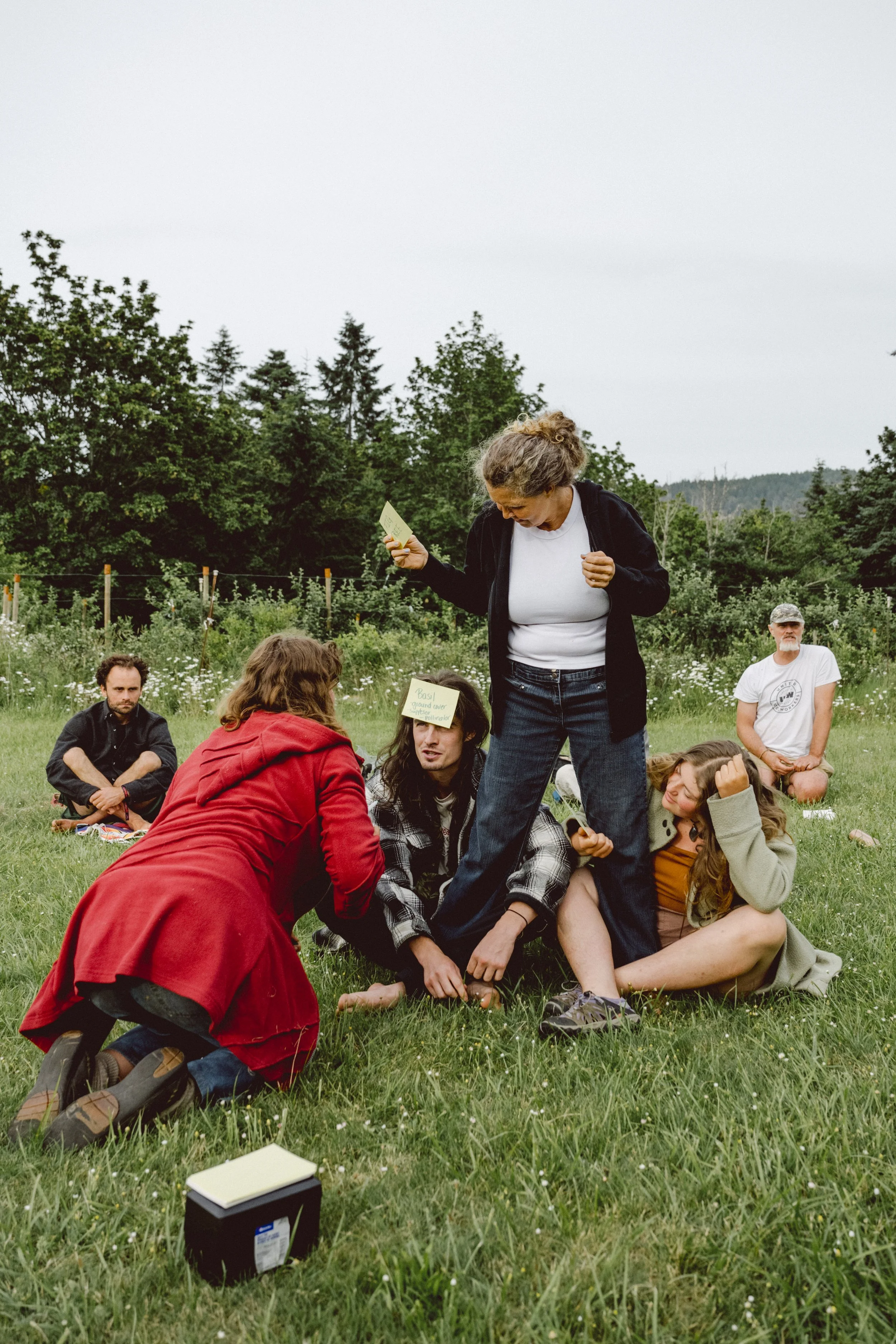
Experiential learning that engages your head, heart & hands.
A range of learning formats, including hands-on projects, multimedia presentations, lectures & discussion, and individual and group work.
A fun, supportive, and respectful learning community
In-depth design practice woven throughout — applied both to the food forest we create together and to a project or site of your own choosing.
Practical experience designing and developing a Food Forest.
A full growing season on one piece of land, watching what you design take root.
Learning Outcomes
Course Offerings
Course Topics
Curriculum
Foundations & Principles
Introduction To Permaculture Design
Permaculture Ethics
Permaculture Principles
Principles of Ecology
Analysis & Design Methods
Observations & Pattern Language
Reading the Landscape
The Keyline Scale of Permanence
Permaculture Design Methods
Physical Systems
Climate & Microclimate
Water
Access & Fencing
Growing Plants
Raising Animals
Energy & Appropriate Technology
The Built Environment
Soil Chemistry, Biology & Restoration
Waste & Bioremediation
Social Systems
Home, Urban & Broadscale Design
Economics
The Keyline Scale of Permanence
Implementation, Maintenance, Evaluation
About the Facilitators
Faculty
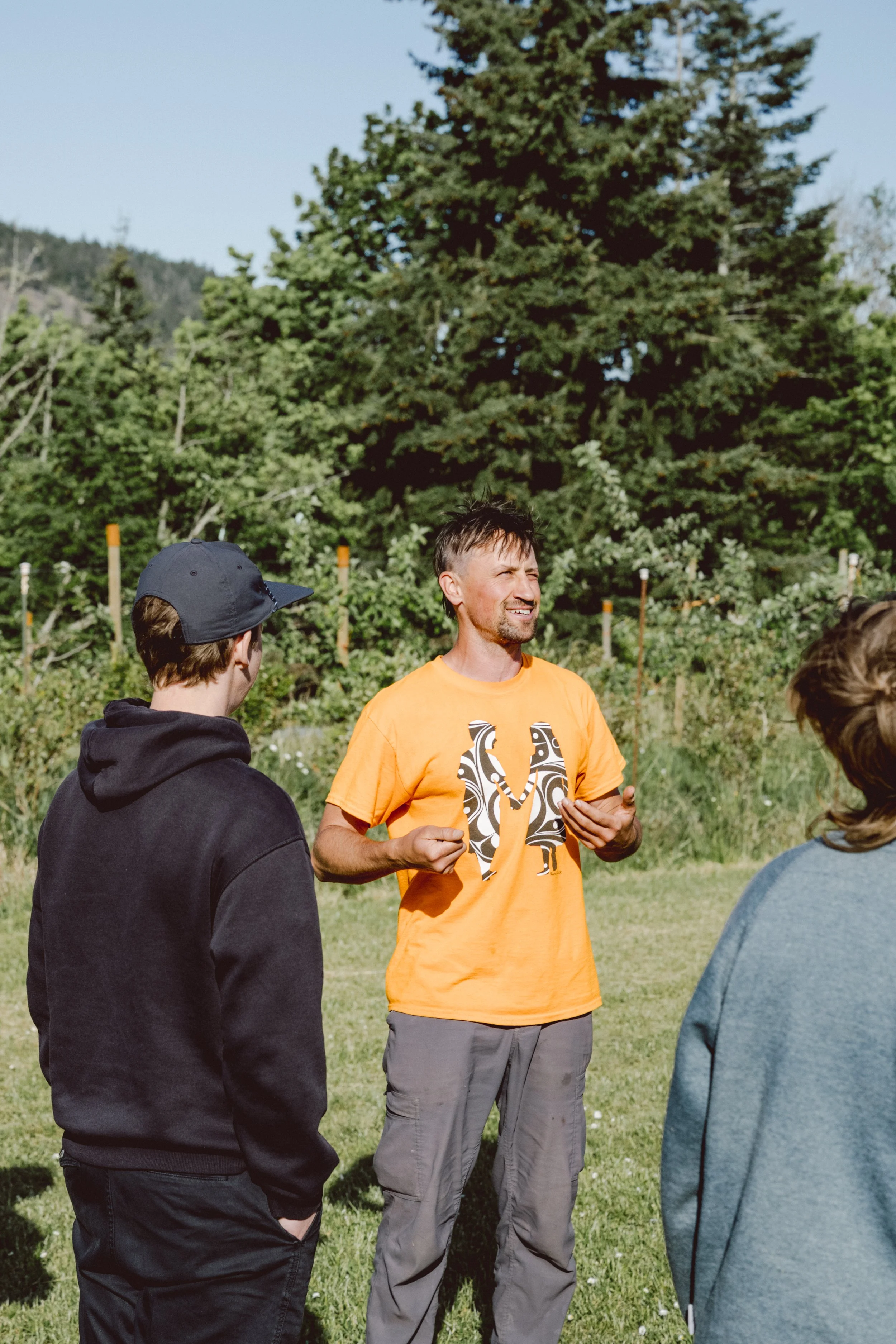
Nick Jones
-
Nick's aspirations are to help lay the foundation for future generations to thrive on earth. His core focuses are spiritual growth, community building and regenerative agriculture. Co-creating a homestead and farm, teaching Permaculture Design, and collaborating with the community to build a healthy culture are how Nick stands against the injustices of colonization & the insanity of infinite growth on a finite planet.
Yearning for the skills and knowledge to be able to live in harmony with nature, Nick completed his first Permaculture Design Certificate (PDC) in 2012 in the Kootenays. Inspired to learn more, he embarked on a pilgrimage to practice with farms and communities. This journey culminated in 2015 with an apprenticeship in Regenerative Agriculture where Nick completed his second PDC.
In 2016 Nick and his family moved into the forests of Mt. Tuam (Ts’uween) on Salt Spring Island (Chu'an, the ancestral and unceded territory of the Hul'qumi'num and SENĆOŦEN speaking peoples) to create a homestead and farm. This ongoing collaboration invites a space of conservation, teaching, and living in balance with the Earth.
A decade of learning from the land and community has taught Nick that he needs to stay humble and ask questions. To balance the hands-on education of off-grid living and farming, Nick began a Diploma in Permaculture Design through the Permaculture Institute in 2017. Under the guidance of his friend and mentor Delvin Solkinson, Nick completed the Diploma in 2021 with a specialization in Education and Site Development. Nick completed a Permaculture Teacher Training Course in 2021, and taught his first Permaculture Design Certificate that summer. He recently completed a second Permaculture Teacher Training Course at OUR Ecovillage, through the Permaculture Institute of North America.
A lifetimes long practitioner of Buddhism, Nick tries to balance his quest for world harmonization by spending time with his family and newborn baby son.
Permaculture Design Practicum
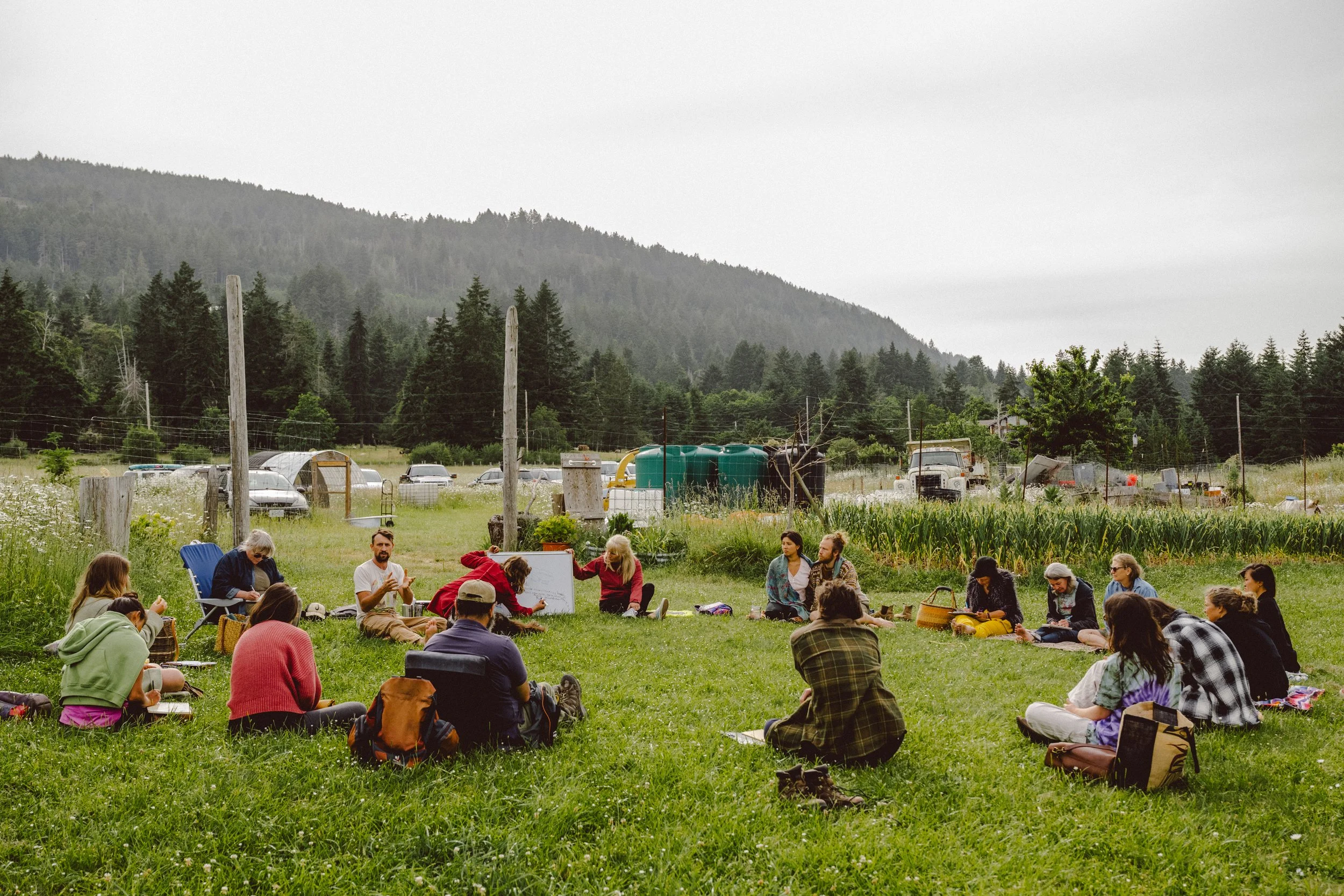
This is more than a classroom course — it is a season of practice. Through land-based work and twelve Fridays in the same place working on the same project, we will create both a design and a food forest that will outlast the course. Come for all twelve and earn your certificate, or join the individual classes you need.
What ~ 84 hours of in-person learning to earn an internationally recognized Permaculture Design Certificate
When ~ Twelve Fridays, August 14th to October 30th, 2026, 9 am to 5 pm
Where ~ Forest Gardens, Mt Tuam, Salt Spring Island, BC
Investment ~ Pay what you want
Drop in ~ Single classes welcome — come for the skills without the certificate
Scholarships ~ Available for BIPOC
Register
Words from Past Participants
Testimonials
-
“Nick is an amazing teacher, his knowledge of permaculture and practical application made for very interesting classes. I loved the diversity of participants and instructors and looked forward to taking my learning from each week and seeing how I could apply them to my own property. If you are interested in attaining your Permaculture Design Certificate I would highly recommend taking it with Nick."
~ Jennie Sparkes
-
"I can't recommend Nick's Permaculture Design Course enough. He served my classmates and myself beautifully in his ability to convey information, share his experienced perspective and hold space for everyone in a kind and respectful manner. The curriculum was engaging and inspiring, as well as seamlessly applicable to one's own projects and ambitions."
~ Will Houser
-
"The Permaculture Design Course was such a rewarding and enriching experience. Nick is an incredible teacher that truly has a passion to share his wealth of knowledge with the world. Not only did I learn what permaculture was but how to use it as a process for almost anything in life! I now have confidence in land assessment, management and usage. By the end of the course I had the skills needed to come up with integrated, sustainable designs. The course material is yours to keep and has become a valuable resource that I will continue to reference for years to come. Nick's style of teaching is refreshing and has a sense of breathability to it that fostered open discussion and student self discovery. Each week included hands on activities, practical skill building and on the land demonstrations. Not only are the topics covered vast and very detailed but the course was structured in such a way that really brought the students together, forming a sense of connection. The course exceeded my expectations and was worth it beyond measure."
~ Tyler
FAQs
Frequently Asked Questions
Still have questions? Take a look at the FAQ or reach out anytime. If you’re feeling ready, go ahead and register.
The Course
-
A PDC is the globally recognised entry-level qualification in permaculture, based on the 72-hour curriculum developed by Bill Mollison. On completing the course you'll receive a certificate recognised by the permaculture community worldwide.
-
Absolutely. The PDC is designed as an introduction and welcomes complete beginners alongside gardeners, farmers, and designers looking to deepen their practice. No prior knowledge or experience is required.
-
Yes — this is one of the most common reasons people take the course. The design methods and principles you'll learn are universal and scale from a small backyard to a large farm. Your final design project can be based on your own land or a project you're working on, making the learning immediately practical.
-
Each Friday splits in two. Mornings, from 9 am to 1 pm, are theory — lectures, discussion, and design work in the finished loft of our workshop. Afternoons, from 2 pm to 5 pm, are hands-on: over the twelve weeks we design and create a food forest together, working through observation, mapping, earthworks, soil building and planting. As the course progresses more of the morning goes into your own design project.
-
Yes. By late October on Mt. Tuam that means proper wet-weather gear.
-
Yes. The food forest we create together is a group design project running the whole length of the course. If you are earning a certificate you'll also complete an individual design project — for a site of your own choosing — and present it to the group in the final week.
The Certificate
-
Successful participants receive an internationally recognized Permaculture Design Certificate issued through the Permaculture Institute, a globally respected leader in the Permaculture movement.
-
To earn your certificate you need to complete your design project and presentation, and attend at least 90% of the course — across twelve Fridays that means missing no more than one day. If you know in advance about a conflict, let us know early and we'll do our best to support you.
-
The printed design portfolio folder is for participants taking the full course. Drop-ins are welcome to photograph the boards and take notes.
-
Yes. Graduates are welcomed into our alumni network — an online community where past participants share projects, ask questions, and stay connected. We also host occasional alumni gatherings and work days on the farm throughout the year.
-
Yes, in two ways. You're welcome to attend the full course purely for the knowledge, without completing the design project. You can also join individual Fridays as a drop-in — come for the topics you want, without committing to the whole twelve. Drop-in participants don't receive a certificate, but they get the same teaching and the same afternoon in the food forest.
On The Day
-
Mornings are theory in the workshop loft, with a break partway through. We stop at one o’clock for an hour — bring your own lunch and we eat together on the land. Afternoons are spent outside on the food forest — observing, designing, digging and planting, depending on the week and the weather. We finish at five.
-
Yes. The site has composting toilets, a propane hot water shower, and a washing machine with air-drying lines. A laundry schedule is posted so everyone gets access throughout the course.
-
Yes. The farm has clean water from our own well, which is filtered for drinking.
-
Yes — the farm has good cell service and Wi-Fi on site. That said, we encourage participants to limit phone and screen use during teaching hours to stay present with the group and the land.
-
It depends on current provincial fire restrictions. We monitor the BC Wildfire Service fire rating throughout the course and keep participants informed.
-
Bring your own lunch. We break for an hour at one o’clock and eat together outside when the weather allows. There is a kettle and running water on site, and a fridge you are welcome to use. Depending on the week there may be something ready to pick from the farm to go alongside whatever you have brought.
-
You are bringing your own lunch, so your diet is entirely in your hands. Let us know about severe allergies so we can keep the shared fridge and kettle area safe.
Fees & Registration
-
Tuition and all course materials, including your printed design portfolio folder, are covered by whatever you choose to contribute. Bring your own lunch each Friday.
-
No. There is no deposit and no set fee. Register first, and decide what to contribute later.
-
The Practicum is offered pay-what-you-want. There is no set fee — you decide what the course is worth to you and what you can afford, and you are welcome whichever end of that you land on. If you are able to pay generously, you are directly funding a place for someone who cannot. A limited number of BIPOC scholarships are available; please reach out after registering.
-
Once we receive your registration we will be in touch by email to walk you through the next steps and confirm any details to make sure you are set up for a great experience.
Getting Here & Safety
-
The farm is located on Mt. Tuam on Salt Spring Island and is not accessible by public transit. If you are driving, parking is available on site. We also put participants in touch with each other before the course so carpools can form.
-
Bring your own lunch each Friday. The course runs from late summer into autumn, so bring layers and proper wet-weather gear for the later weeks.
-
Please do not attend if you are unwell. The farm is located on a mountain with sections of steep and rocky terrain, and normal farm risks apply — uneven ground, tools, and sun exposure. Safety briefings are conducted before all practical sessions, appropriate protective equipment is provided, and first aid is available on site at all times. Please disclose any relevant medical conditions after registering so we can ensure your safety and comfort.
-
A moderate level of fitness is helpful — you'll be spending time outdoors on uneven terrain, and some sessions involve digging or lifting. That said, the course is inclusive and you are always welcome to observe rather than participate in any physical task without it affecting your certification.
-
Participants are not required to help with farm maintenance, but there will be optional opportunities to pitch in throughout the course. We do ask everyone to help clean up after meals.
-
The farm is not wheelchair accessible, but we can accommodate participants with limited mobility. Please get in touch after registering to discuss your needs and we'll work with you to make the course as comfortable and accessible as possible.
-
The course is designed for adult participants, however mature children would be welcome to attend if they want to participate as well.